
The Complete Guide to Conducting Bitcoin Transactions
Bitcoin transactions are the foundation of using and interacting with the world’s first decentralized digital currency. Would you like to know methods of sending Bitcoin to a friend, making a purchase, or receiving payments, then understanding how Bitcoin transactions work is another big step in Bitcoin. Bitcoin Babies simple guide will break down Bitcoin transactions in simple terms, covering on-chain and off-chain (Lightning Network) methods, wallet management, and best practices for secure transfers.
Understanding Bitcoin Transactions (Made Easy!)
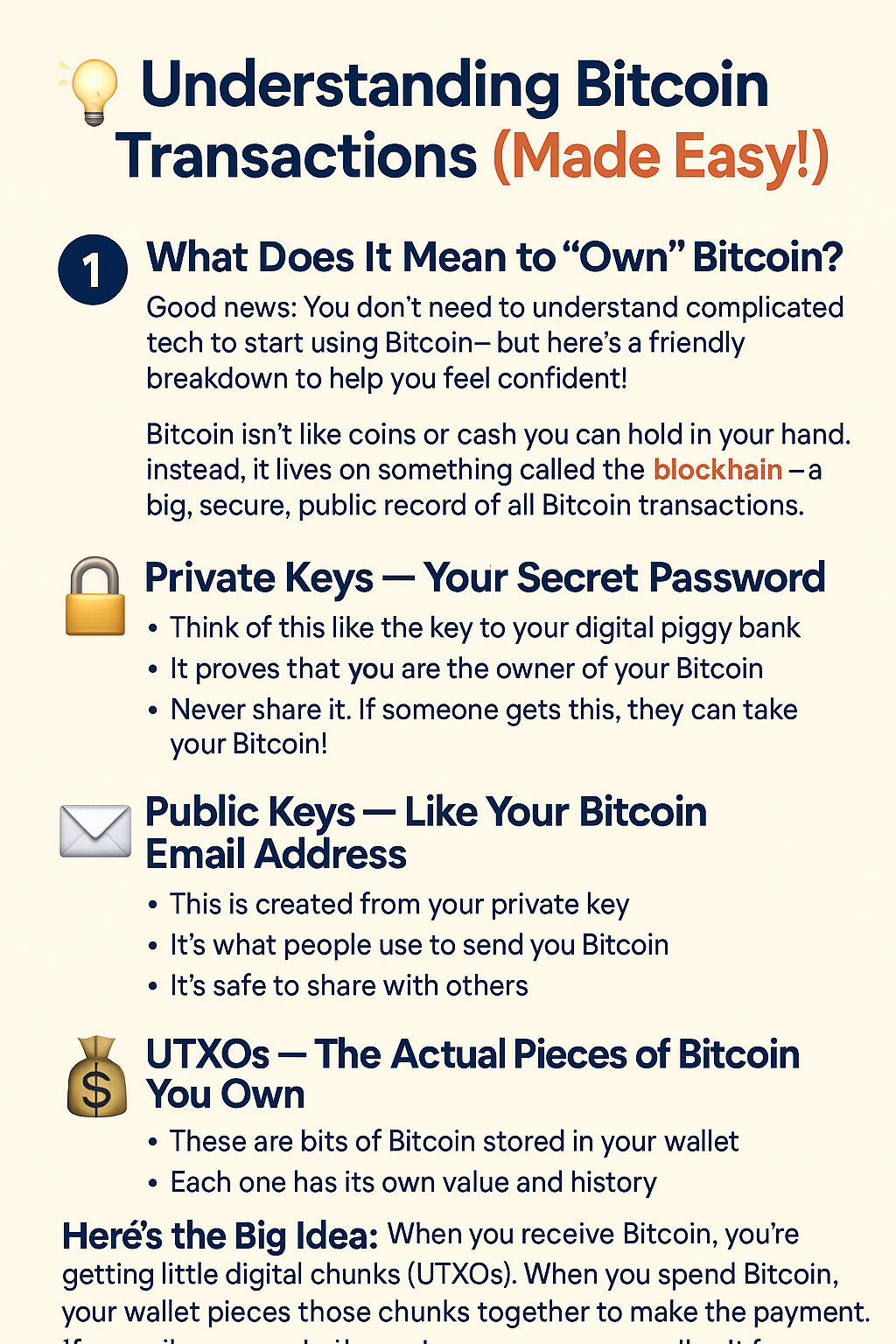
You don’t need to do the math—your wallet handles it for you!
How to Acquire Bitcoin
There are several ways to acquire Bitcoin, each addresses different needs and preferences:
1. Bitcoin Exchanges
Simply, you can start by choosing a reputable Bitcoin exchange. These platforms facilitate buying Bitcoin with fiat currency. To get started:
- Complete Identity Verification: Verify your identity as required by the exchange platform you are using, e.g., Bitnob
- Link Your Bank or Any Other Account (Such as M-Pesa): Connect your account to deposit and receive funds.
- Make Your Purchase: Choose how much Bitcoin you want and confirm the transaction.
2. Peer-to-Peer (P2P) Transactions
P2P is buying Bitcoin directly from individuals. P2P platforms match buyers and sellers, enabling you to negotiate payment methods, which can include bank transfers, mobile payments, or even cash. In this case, Bitcoin.
3. Bitcoin ATMs
For those who prefer cash transactions, Bitcoin ATMs provide a straightforward method. You can exchange physical currency for Bitcoin, which is then deposited into your wallet. Some Bitcoin ATMs also allow you to sell Bitcoin and withdraw cash.
Transactions: The Foundation
If you want to carry out any transactions as a Bitcoiner, two methods can be used to send or receive. On-chain and off-chain transactions is how we transact in the Bitcoin community. Good news is that both serve unique purposes and offer distinct advantages that suit different Bitcoiners.
On-Chain Transactions
These transactions occur directly on the Bitcoin blockchain, ensuring transparency and security.
How On-Chain Transactions Work
- Transaction Creation
- Network Propagation
- Mining & Confirmation
Key Features of On-Chain Transactions
✔ Absolute Security
- Protected by Bitcoin's proof-of-work (200+ EH/s of mining power)
- Immutable once confirmed (typically 6 blocks)
✔ Complete Transparency
- All transactions visible on public blockchain explorers
- Enables full auditability
✔ Global Settlement/Public Ledger
- No intermediaries or borders
- Identical rules for all participants worldwide
- All transaction details, including sender, recipient, and the amount, are permanently recorded on the blockchain.
✔ Irreversibility
- Once confirmed, transactions cannot be altered or reversed.
Practical Considerations
- Fee Market Dynamics
- Confirmation Times
- Optimal Use Cases
They can be used for:
Off-Chain Transactions: The Lightning Network
Off-chain transactions bypass the blockchain, offering faster and often cheaper alternatives. They are facilitated through secondary networks or payment channels, such as the Lightning Network.
How Lightning Transactions Work
- Channel Establishment
- Instant Transactions
- Channel Management
Key Advantages
✔ Microtransaction Capability
- Fees can be as low as 1 satoshi ($0.0003)
- Enables streaming payments - Automation of payment process and ensures a continuous flow of funds
✔ Privacy Enhancements
- Payment paths are onion-routed - This means that the paths are pseudonymous rather than anonymous
- Observers can't determine full transaction paths
✔ Scalability Solution
- Processes millions of transactions per second
- Reduces mainchain congestion
Practical Considerations
- Channel Liquidity
- Watchtowers
- Optimal Use Cases
Transaction Lifecycle
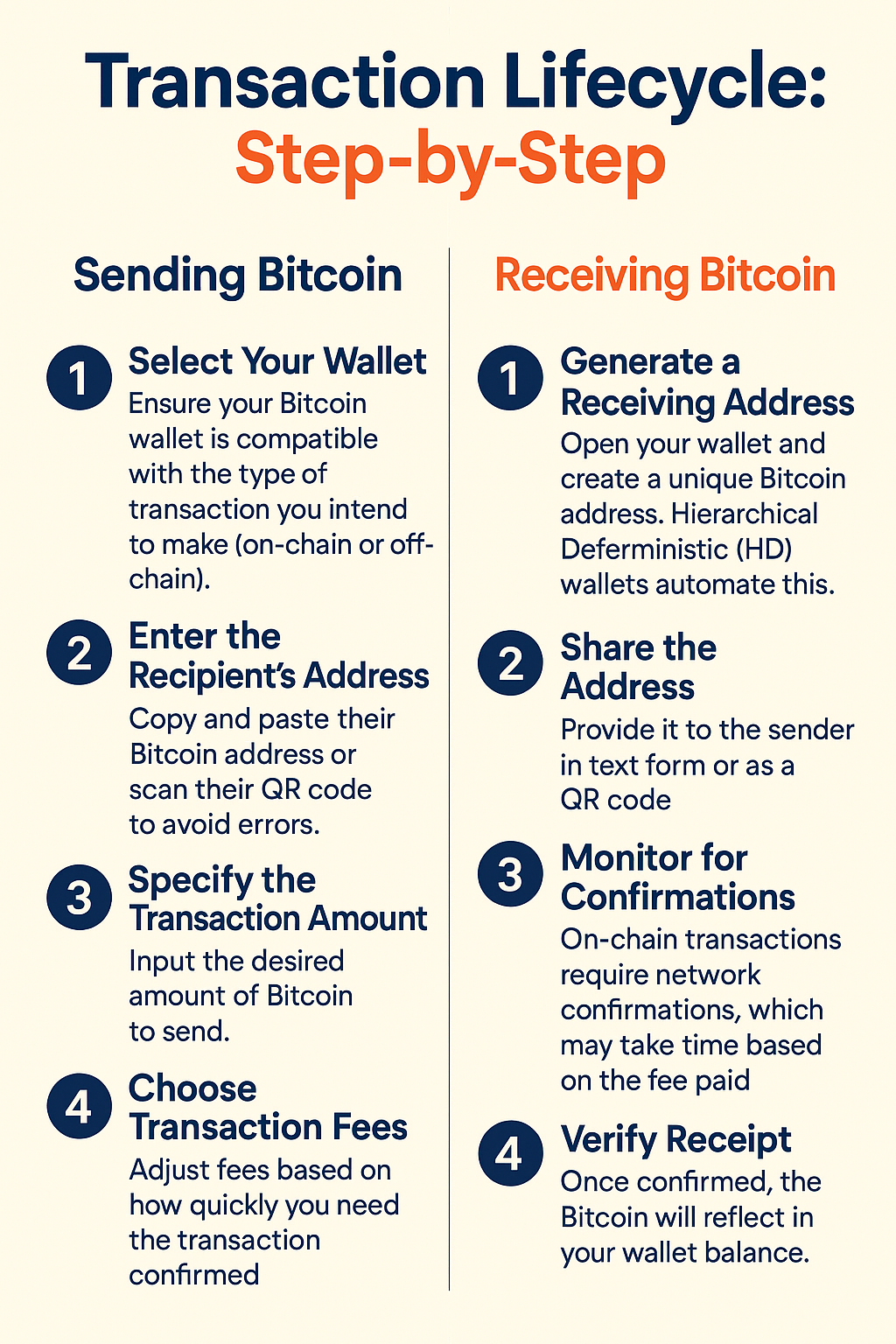
Choosing Your Transaction Method
Tips for Secure Bitcoin Transactions
- Use Reputable Wallets and Exchanges: Ensure you trust the platform or software you're using to store and trade Bitcoin.
- Double-Check Addresses: Bitcoin transactions are irreversible. Verify addresses before sending funds.
- Secure Your Private Keys: Protect your private keys with strong encryption and avoid sharing them.
- Enable Two-Factor Authentication (2FA): Add an extra layer of security to your wallet or exchange account.
- Maintain a hybrid strategy:
Choosing the Right Transaction Type
The choice between on-chain and off-chain transactions depends on your priorities:
- For high-value transfers, opt for on-chain transactions to leverage blockchain security.
- For smaller, frequent transactions, use off-chain methods to save time and money.
Recommendations for different players who want to participate in the Bitcoin Blockchain are as follows:
- For New Users
- For Businesses
- For Privacy-Conscious
Bitcoin offers a versatile, secure, and efficient way to manage financial transactions in the digital age. By mastering these basics, you’ll be well-prepared to navigate the evolving world of Bitcoin with confidence.
🔗 Continue your Bitcoin education at BitcoinBabies.com